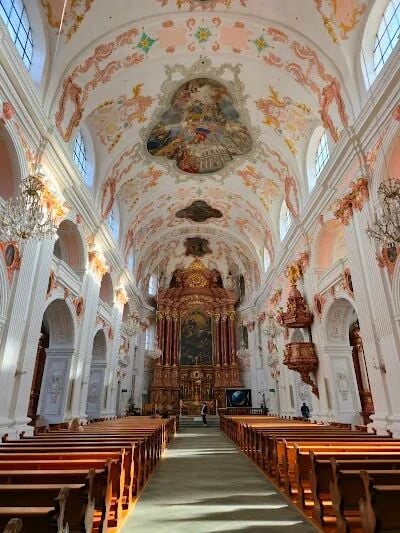

In the Jesuit Church of Lucerne, the magnificent high altar, standing nineteen meters tall, is an absolute focal point. Yet it is not made of solid, natural marble, but rather of artful red stucco marble — and fine Lahn marble. Stucco marble is a technique for imitating marble and stone, defined by the additive application of pigmented gypsum mortar and a characteristic surface compression. It is composed of gypsum, size, and pigments, and is produced through laborious handcraft. This high-quality imitation technique allows for highly individual surface designs. During the Baroque period, stucco marble became a defining decorative element of prestigious buildings. The reasons for preferring it over natural stone included the freedom to choose any color and texture, its lighter weight, and the opportunity to demonstrate exceptional craftsmanship. Specialized stucco workers of that era created pieces that even surpassed the value of carved marble. This refined technique was used throughout the Baroque to create strikingly convincing imitations of precious stone.
The high altar: from the altarpiece — the Glory of Saint Francis Xavier — to the columns, a rich reddish stucco marble dominates the entire composition. The pulpit: the church's pulpit is also crafted entirely from red stucco marble. Additional altars and pilasters: many of the side elements and the pilasters in the bright, light-filled nave are likewise exquisitely marbled. The altar, like the rest of the furnishings, was donated by Lucerne patrician families.

The Red Stucco Marble
Jesuitenkirche